Why does voltage behave abnormally?
Your vehicle’s electrical system depends on stable voltage to power everything from the engine control unit to the headlights and infotainment system. When voltage starts behaving abnormally, you may notice dim lights, battery warnings, starting problems, or electronic systems acting unpredictably.
Voltage fluctuations are often an early warning sign of a charging system issue. While some variations are normal, large or frequent changes should not be ignored.
Understanding the possible causes can help you identify the problem before it leads to a breakdown.
What Is Considered Normal Vehicle Voltage?
When the engine is off, a healthy battery typically reads:
- 12.4–12.8 volts at rest
When the engine is running, the alternator should usually maintain:
- 13.5–14.8 volts
Small fluctuations are normal as the vehicle adjusts electrical loads, but voltage that repeatedly drops too low or spikes too high often indicates a fault.
Signs of Abnormal Voltage
Voltage problems can appear in different ways:
- Flickering headlights
- Dashboard warning lights
- Slow engine cranking
- Battery warning indicator
- Electronic accessories resetting
- Radio or screen restarting unexpectedly
- Power windows operating slowly
These symptoms often point to issues within the charging or electrical system.
Common Causes of Abnormal Voltage
1. Failing Alternator
The alternator is responsible for charging the battery and supplying electrical power while the engine is running.
When it begins to fail, voltage may become unstable.
Symptoms
- Battery warning light
- Flickering lights
- Weak electrical performance
- Voltage readings that constantly change
Fix
Test alternator output and replace it if charging performance is outside specifications.
2. Weak or Aging Battery
A battery that is nearing the end of its lifespan may struggle to hold voltage consistently.
Symptoms
- Hard starting
- Low voltage readings
- Electrical issues after sitting overnight
Fix
Perform a battery load test and replace the battery if necessary.
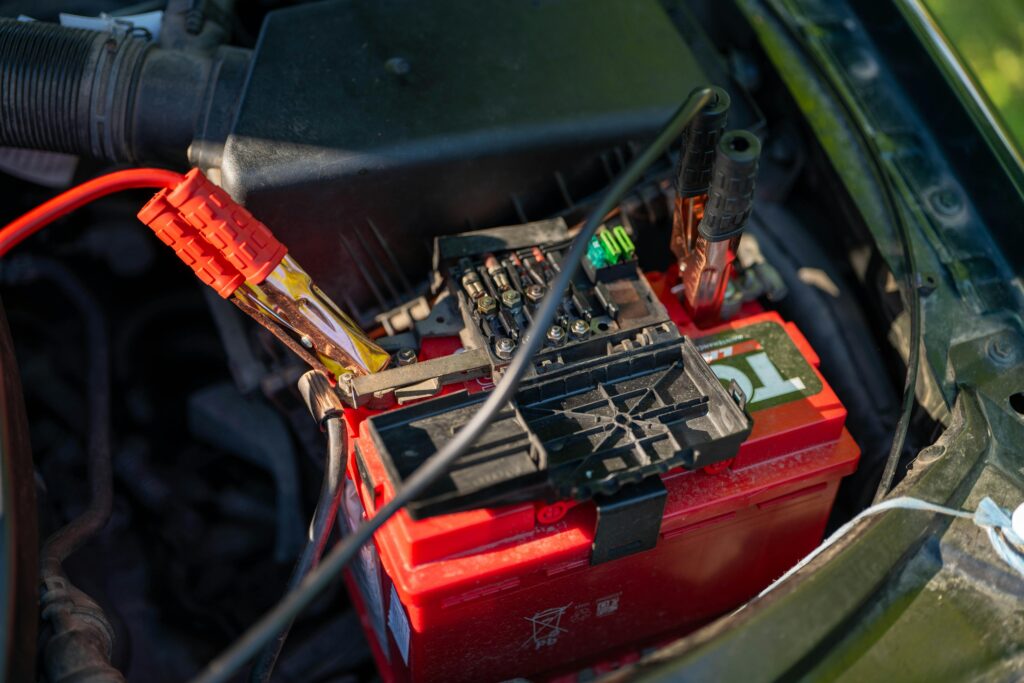
3. Loose Battery Connections
Corroded or loose battery terminals can interrupt electrical flow.
Symptoms
- Intermittent electrical failures
- Sudden voltage drops
- Random warning lights
Fix
Clean and tighten battery terminals and cable connections.
4. Poor Ground Connections
Ground cables complete electrical circuits throughout the vehicle.
A damaged or loose ground connection can create unusual voltage behavior.
Symptoms
- Flickering lights
- Sensor errors
- Electrical components working inconsistently
Fix
Inspect and secure all major grounding points.
5. Faulty Voltage Regulator
The voltage regulator controls how much voltage the alternator produces.
If it fails, voltage may become too high or too low.
Symptoms
- Overcharging battery
- Voltage spikes
- Battery overheating
- Frequent bulb failures
Fix
Replace the voltage regulator or alternator assembly, depending on vehicle design.
6. Damaged Wiring
Electrical wiring can deteriorate due to heat, vibration, or corrosion.
Symptoms
- Random electrical faults
- Inconsistent charging performance
- Voltage fluctuations
Fix
Inspect wiring harnesses and repair damaged sections.
7. Excessive Electrical Load
Adding high-power accessories can overwhelm the charging system.
Examples include:
- Powerful audio systems
- Auxiliary lighting
- Aftermarket electronics
Symptoms
- Voltage drops under load
- Dim lights at idle
- Battery discharge
Fix
Upgrade the charging system or reduce electrical demand.
Can Voltage Fluctuations Be Normal?
Yes. Modern vehicles constantly adjust charging rates based on battery condition, temperature, and electrical demand.
Minor voltage changes are often normal.
However, if voltage:
- Drops below normal operating levels
- Spikes excessively
- Causes noticeable electrical problems
then further inspection is recommended.
How to Check Vehicle Voltage
A digital multimeter can provide a quick assessment.
Engine Off
- Normal: 12.4–12.8 volts
Engine Running
- Normal: 13.5–14.8 volts
Values significantly outside these ranges may indicate a charging system problem.
When Should You Be Concerned?
Seek professional diagnosis if:
- The battery warning light stays on
- Voltage drops below 13 volts while driving
- Voltage exceeds 15 volts consistently
- Electrical accessories stop working properly
- The vehicle experiences repeated battery failures
These signs often indicate a developing charging system fault.
How to Prevent Voltage Problems
- Inspect battery terminals regularly
- Replace aging batteries before failure
- Keep electrical connections clean
- Test the charging system periodically
- Avoid overloading the electrical system
- Address warning lights promptly
Routine maintenance can help prevent most voltage-related issues.
FAQ
Why does my car voltage go up and down while driving?
Small fluctuations can be normal, but large changes may indicate an alternator or voltage regulator problem.
Can a bad battery cause voltage fluctuations?
Yes. A weak battery can place additional stress on the charging system and create unstable voltage readings.
What voltage is too high for a car battery?
Consistent readings above 15 volts may indicate an overcharging condition.
Can a bad alternator cause electrical problems?
Yes. A failing alternator can affect lights, sensors, engine performance, and battery charging.
Why do my headlights flicker when driving?
Flickering lights are often caused by voltage instability, poor connections, or charging system issues.
Should I drive with abnormal voltage readings?
It is best to diagnose the issue quickly. Charging system failures can leave the vehicle unable to start or operate properly.
Conclusion
Abnormal voltage behavior is often linked to problems with the alternator, battery, voltage regulator, wiring, or grounding system. While minor fluctuations can be normal, significant voltage changes should not be ignored.
Early diagnosis can prevent unexpected breakdowns, protect sensitive electronics, and ensure the charging system continues to operate reliably.