Why does my ignition system fail electrically?
An electrical ignition system failure can prevent your engine from starting, cause random misfires, reduce performance, or even leave you stranded without warning. Modern ignition systems depend on several electrical components working together to create the spark needed for combustion. When one part fails, the entire system can be affected.
Understanding the common causes of ignition system electrical failures can help you identify problems early and avoid unnecessary repairs.
What Is the Ignition System?
The ignition system generates and delivers high-voltage electrical sparks to the spark plugs. These sparks ignite the air-fuel mixture inside the engine cylinders.
Most modern vehicles use:
- Ignition coils
- Spark plugs
- Crankshaft position sensor
- Camshaft position sensor
- Engine Control Module (ECM)
- Wiring and electrical connectors
- Battery and charging system
A fault in any of these components can interrupt spark production.
Common Symptoms of Electrical Ignition Failure
Electrical ignition problems often produce noticeable symptoms, including:
- Engine cranks but will not start
- Intermittent no-start condition
- Rough idle
- Engine misfires
- Sudden stalling
- Poor acceleration
- Increased fuel consumption
- Check Engine Light illuminated
Some failures occur only when the engine is hot, making diagnosis more difficult.
Faulty Ignition Coil
The ignition coil converts low battery voltage into the high voltage required by the spark plugs.
When an ignition coil begins to fail electrically, it may:
- Produce weak spark
- Cause cylinder misfires
- Create hard starting conditions
- Trigger fault codes
Heat and vibration are common reasons ignition coils deteriorate over time.
Damaged Wiring or Connectors
Electrical connections play a critical role in ignition system operation.
Common wiring problems include:
- Corroded terminals
- Loose connectors
- Broken wires
- Melted insulation
- Rodent damage
Even a small increase in electrical resistance can reduce coil performance and create intermittent ignition failures.
Inspect wiring near the ignition coils, sensors, and engine harness for visible damage.
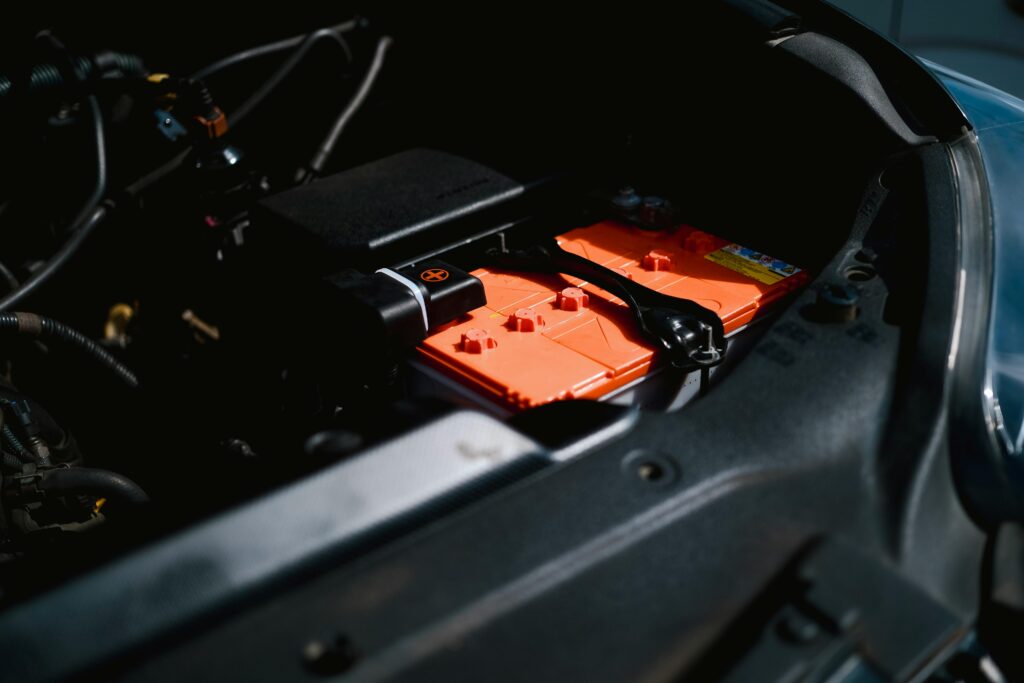
Weak or Failing Battery
Many drivers overlook the battery when diagnosing ignition problems.
A weak battery may:
- Reduce available voltage to ignition components
- Cause slow cranking
- Prevent proper coil operation
- Create intermittent starting issues
If ignition problems appear alongside slow engine cranking, battery testing should be one of the first diagnostic steps.
Charging System Problems
The alternator supplies electrical power while the engine is running.
A failing alternator can cause:
- Low system voltage
- Weak spark output
- Engine stalling
- Repeated battery discharge
Ignition components require stable voltage. Charging system issues can mimic ignition failures.
Crankshaft Position Sensor Failure
The crankshaft position sensor tells the engine computer when to fire the ignition coils.
If this sensor fails:
- The engine may not start
- Spark production may stop completely
- Random stalling can occur
- Misfire codes may appear
Many no-spark conditions are ultimately traced to a defective crankshaft position sensor.
Camshaft Position Sensor Issues
The camshaft position sensor works with the crankshaft sensor to synchronize ignition timing.
Electrical failures in this sensor can cause:
- Difficult starting
- Misfires
- Reduced engine performance
- Check Engine Light activation
A faulty camshaft sensor may not always prevent starting but can significantly affect engine operation.
Defective Engine Control Module (ECM)
Although less common, the Engine Control Module can develop internal electrical faults.
Possible ECM-related ignition problems include:
- No spark condition
- Random misfires
- Multiple sensor communication errors
- Intermittent engine shutdown
Because ECM replacement is expensive, all other possible causes should be eliminated first.
Faulty Ignition Switch
The ignition switch supplies electrical power to many vehicle systems.
A worn ignition switch may cause:
- Intermittent power loss
- Sudden stalling
- No-crank conditions
- No-spark situations
Drivers may notice that moving the key slightly changes the behavior of the vehicle.
Blown Fuse or Faulty Relay
Many ignition circuits are protected by fuses and controlled through relays.
A failed fuse or relay can:
- Cut power to ignition coils
- Disable engine management systems
- Prevent the engine from starting
Always inspect related fuses before replacing expensive components.
Moisture and Water Intrusion
Water can create electrical problems inside ignition components.
Potential sources include:
- Engine washing
- Heavy rain
- Damaged seals
- Leaking windshield channels
Moisture can lead to:
- Short circuits
- Corrosion
- Misfires
- Hard starting
Drying affected components may temporarily restore operation, but damaged parts often require replacement.
Overheating Electrical Components
Many ignition failures appear only after the engine reaches operating temperature.
Heat can cause:
- Coil insulation breakdown
- Sensor signal loss
- Expansion of damaged wiring
- Internal electronic failures
If the vehicle starts normally when cold but stalls after warming up, heat-sensitive components should be investigated.
How Electrical Ignition Failures Are Diagnosed
Technicians typically diagnose ignition failures by:
- Scanning for diagnostic trouble codes.
- Checking battery and charging system voltage.
- Testing ignition coil output.
- Inspecting wiring and connectors.
- Monitoring crankshaft and camshaft sensor signals.
- Verifying power and ground circuits.
- Performing resistance and continuity tests.
A systematic approach prevents unnecessary parts replacement.
Can You Continue Driving?
It depends on the severity of the problem.
If the ignition system is causing:
- Severe misfires
- Stalling
- No-start conditions
Driving is not recommended.
Continued operation with ignition problems can damage the catalytic converter and worsen engine performance.
Conclusion
Electrical ignition system failures are commonly caused by defective ignition coils, damaged wiring, weak batteries, charging system issues, faulty sensors, bad relays, or ignition switch problems. Because many of these symptoms overlap, proper testing is essential before replacing parts. Identifying the root cause early can prevent breakdowns, improve reliability, and reduce repair costs.
FAQ
Why does my engine crank but not start when the ignition system fails?
The starter motor can still turn the engine even if the ignition system is not producing spark. Without spark, combustion cannot occur, so the engine will not start.
Can a bad battery cause ignition system problems?
Yes. Low battery voltage can prevent ignition coils and electronic control modules from operating correctly, leading to hard starting or no-start conditions.
How do I know if my ignition coil is failing?
Common signs include misfires, rough idle, poor acceleration, difficulty starting, and an illuminated Check Engine Light.
Can a crankshaft sensor cause a no-spark condition?
Yes. If the crankshaft position sensor fails, the engine computer may stop triggering the ignition coils, resulting in no spark.
Why does my car stall after warming up?
Heat-sensitive ignition coils, sensors, wiring, or electronic modules may fail as temperatures rise, causing stalling or misfires.
Is an ignition system electrical failure expensive to repair?
Repair costs vary widely. Replacing a fuse or relay is usually inexpensive, while replacing multiple ignition coils, sensors, or an engine control module can be significantly more costly.
Can corroded wiring cause intermittent ignition problems?
Yes. Corrosion increases electrical resistance and can interrupt voltage flow, leading to random misfires, hard starting, or sudden engine shutdown.
Will the Check Engine Light always come on for ignition problems?
Not always. Some intermittent electrical faults may occur without immediately triggering a warning light, especially during the early stages of failure.