Why does my car stay hot longer than usual?
It is completely normal for a car engine to remain warm for a few hours after a drive. Modern engines are built with heavy cast iron or aluminum blocks that act as massive heat sinks, intentionally retaining heat to make restarting more efficient and reduce emissions.
However, if you notice your engine is staying hot significantly longer than usual, or if the hood feels exceptionally hot to the touch hours after parking, it indicates that the residual heat is trapped. This happens when the automotive cooling system fails to shed its thermal load before or immediately after shutdown.
Mechanical Causes of Prolonged Heat Retention
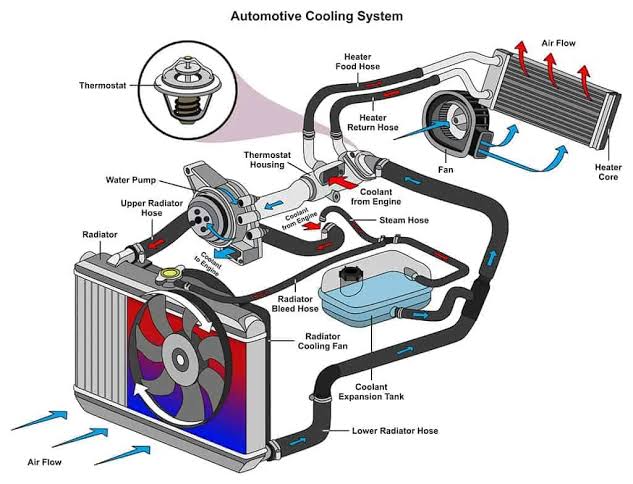
When components in the cooling circuit—as shown in the diagram above—begin to degrade, the system cannot drop to baseline temperatures efficiently. Here are the primary reasons why:
1. Low Coolant Level or Air Pockets
If the coolant expansion tank is low, there isn’t enough liquid volume to absorb and transfer the heat away from the engine block. Furthermore, low fluid allows air bubbles to form. Because air does not dissipate heat like liquid coolant, these pockets insulate the heat inside the engine, forcing it to cool down via slow, natural atmospheric radiation rather than active fluid exchange.
2. Faulty Electric Radiator Cooling Fan
When you turn off a car, the engine bay relies on the radiator cooling fan to pull air through the radiator fins and force the stagnant, hot air out of the engine bay. Many modern vehicles are programmed to keep this fan spinning for several minutes after shutdown if the coolant temperature is high. If your fan motor, relay, or coolant temperature sensor is failing, the fan will cut out early (or not run at all), sealing the heat inside the engine bay.
3. A Sticking or Sluggish Thermostat
The thermostat acts as a gatekeeper. When functioning properly, it opens to let hot coolant flow to the radiator and closes when the engine is cold. If the thermostat is starting to stick partially closed, it restricts the flow of fluid through the upper radiator hose. This means the engine runs hotter during operation, leaving a much higher thermal load to dissipate once you park.
4. Scale Build-up and Internal Corrosion
Over the years, using tap water instead of distilled water in the cooling system creates mineral scale deposits inside the radiator core and engine jackets. This scale acts like an insulating blanket. It prevents the heat from escaping the engine block into the coolant, and prevents the radiator from releasing that heat into the air, causing the car to stay hot for extended periods.
5. Environmental Factors and Underhood Insulation
Sometimes the issue isn’t mechanical. High ambient summer temperatures naturally slow down the cooling process. Additionally, the sound-dampening insulation pad attached to the underside of your hood traps heat. If the ambient air is thick and hot, and the hood insulation is intact, heat can only escape downward toward the pavement, which takes a long time.
How to Diagnose It
- Check the Fan: Next time you turn off the car after a long drive, stand by the hood. Do you hear the electric radiator cooling fan running? If it’s silent while the engine feels like a furnace, check your fan fuses and relays.
- Inspect the Coolant Condition: Wait for the engine to cool completely, then open the radiator cap or expansion tank. If the fluid looks muddy, brown, or full of floating particles, it is likely insulating your engine rather than cooling it.
- Laser Thermometer Test: Use an infrared thermometer to read the temperature of the upper and lower radiator hoses while the car is idling. If one hose is burning hot and the other is lukewarm, your thermostat or radiator is restricted.
FAQ: Frequently Asked Questions
Q: How long should a car engine take to cool down completely? A: Under normal circumstances and average weather, it takes about 2 to 5 hours for an engine to return to ambient outdoor temperature. If it still feels burning hot after 4+ hours in mild weather, there is likely a restriction or low fluid issue.
Q: Can a bad radiator cap cause the engine to stay hot longer? A: Yes. A failing radiator cap cannot hold the required pressure. Loss of pressure lowers the boiling point of the coolant, turning liquid into vapor pockets that trap heat inside the engine block.
Q: Does oil quality affect how long an engine stays hot? A: Absolutely. Engine oil is responsible for up to 40% of an engine’s cooling process. If your oil is old, dirty, or low, internal friction increases. This extra friction generates higher base temperatures that take longer to dissipate.
Q: Should I leave my hood open in the garage to help it cool? A: While opening the hood allows trapped heat to rise and escape quickly, it only masks the underlying problem. It is safer to diagnose why the cooling system isn’t shedding heat efficiently on its own.