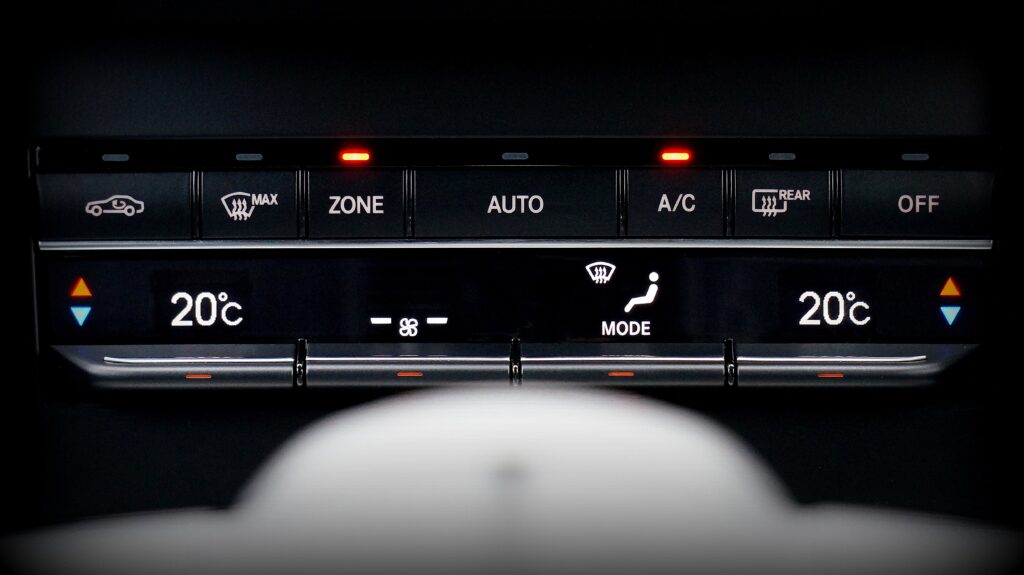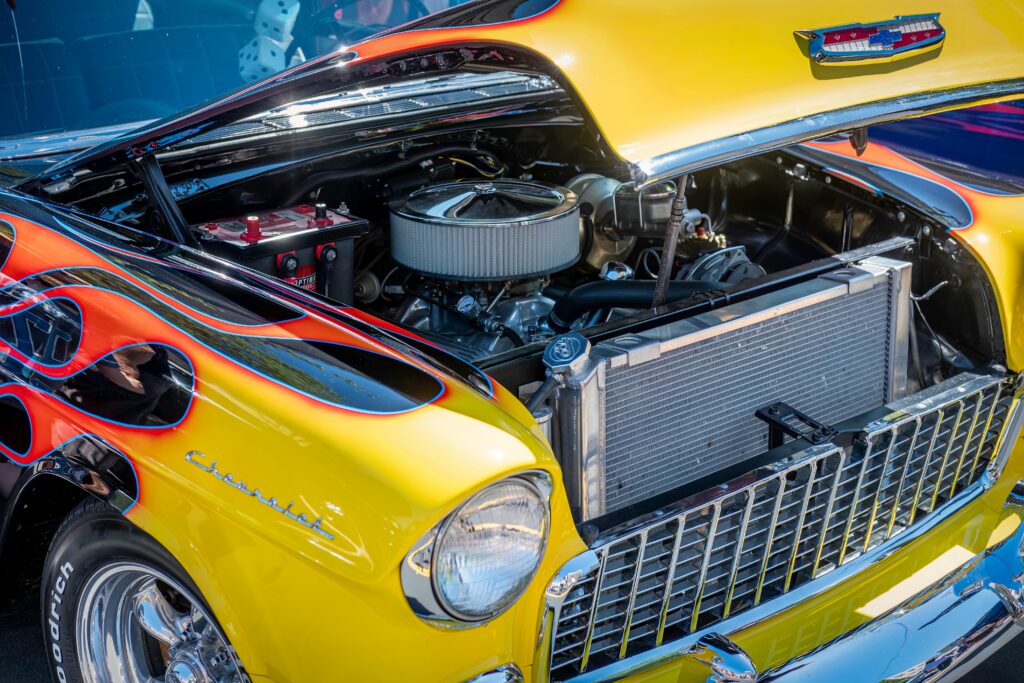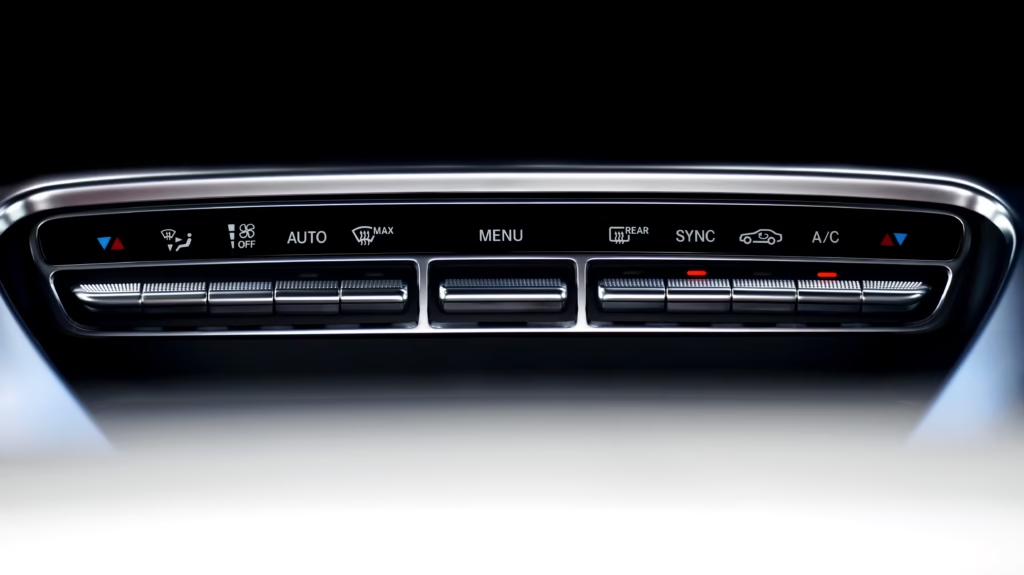
Few automotive problems are more frustrating than watching the temperature gauge climb whenever the air conditioner is switched on. If your car runs at a normal temperature with the AC off but begins to overheat as soon as the AC is activated, it usually indicates that the cooling system is already under stress or that one of its components is not functioning properly.
Understanding why this happens can help prevent expensive engine damage and restore both cooling performance and cabin comfort.
Why the Air Conditioner Increases Engine Temperature
When the air conditioning system is turned on, the engine must work harder. The AC compressor draws power from the engine, creating additional load. At the same time, the AC condenser located in front of the radiator releases heat, increasing the temperature of the air flowing through the cooling system.
A healthy cooling system is designed to handle this extra heat. However, if there is an existing weakness, the additional thermal load from the AC can push the engine beyond its normal operating temperature.
Common Reasons a Car Overheats With the AC On
1. Cooling Fan Problems
The radiator cooling fans play a critical role when the AC is operating. In many vehicles, turning on the AC automatically activates one or more electric cooling fans.
If a fan motor fails, a relay malfunctions, or wiring becomes damaged, airflow through the radiator and condenser decreases significantly. This often causes overheating, especially during slow driving or while idling in traffic.
Symptoms include:
- Temperature rises while stopped.
- AC performance worsens at idle.
- Cooling fan does not run when the AC is switched on.
2. Low Coolant Level
Coolant absorbs heat from the engine and transfers it to the radiator. When coolant levels drop due to leaks or poor maintenance, the cooling system loses its ability to control engine temperature.
The additional heat generated by the AC system may then cause overheating much faster.
Common leak locations include:
- Radiator hoses
- Water pump
- Radiator tanks
- Heater core
- Coolant reservoir
3. Clogged or Restricted Radiator
Over time, rust, mineral deposits, and debris can block radiator passages. A restricted radiator cannot dissipate heat efficiently.
When the AC condenser adds extra heat in front of the radiator, cooling efficiency drops even further, leading to rising engine temperatures.
Signs of a clogged radiator:
- Frequent overheating
- Coolant discoloration
- Uneven radiator temperature across its surface
4. Faulty Thermostat
The thermostat regulates coolant flow between the engine and radiator.
If it becomes stuck partially closed, coolant circulation is restricted. The engine may appear normal under light load, but the extra heat generated when the AC is running can quickly expose the problem.
Common symptoms:
- Sudden temperature spikes
- Inconsistent engine temperature
- Overheating after warming up
5. Weak or Failing Water Pump
The water pump circulates coolant throughout the engine.
A worn impeller, damaged bearing, or internal pump failure can reduce coolant flow. Under normal conditions, the problem may not be obvious. However, the additional thermal load created by the AC system can cause the engine temperature to rise rapidly.
Warning signs include:
- Coolant leaks near the pump
- Grinding noises
- Engine overheating during hot weather
6. Dirty Condenser or Radiator Fins
The condenser and radiator depend on unrestricted airflow.
Road debris, dirt, leaves, insects, and mud can accumulate between the condenser and radiator, reducing cooling efficiency.
Because the condenser releases heat directly in front of the radiator, any airflow restriction can contribute significantly to overheating when the AC is operating.
7. Failing Radiator Cap
The radiator cap maintains pressure within the cooling system.
A defective cap may allow coolant to boil at a lower temperature, reducing the system’s ability to handle increased heat loads.
Although often overlooked, a bad radiator cap can contribute to overheating problems.
8. Engine Running Lean
An engine that receives too much air and not enough fuel runs hotter than normal.
Vacuum leaks, faulty sensors, fuel delivery issues, or intake system problems can create a lean condition. When the AC compressor adds load to the engine, temperatures may increase enough to trigger overheating.
9. Head Gasket Problems
A damaged head gasket can allow combustion gases to enter the cooling system, creating excessive pressure and reducing cooling efficiency.
The engine may only show symptoms under heavier loads, such as when the AC is running.
Potential signs include:
- White exhaust smoke
- Coolant loss without visible leaks
- Bubbles in the coolant reservoir
- Milky engine oil
Why Overheating Often Happens at Idle
Many drivers notice that the temperature rises only while sitting in traffic with the AC on.
At highway speeds, natural airflow helps cool the radiator and condenser. At idle, cooling depends almost entirely on the radiator fans.
This is why faulty cooling fans are among the most common causes of overheating with the AC turned on.
Is It Safe to Keep Driving?
Driving an overheating vehicle is risky. Excessive engine temperatures can cause:
- Blown head gaskets
- Warped cylinder heads
- Damaged pistons
- Cracked engine components
If the temperature gauge enters the red zone, stop the vehicle safely and allow the engine to cool before investigating the cause.
How to Diagnose the Problem
A systematic inspection can often identify the source of the issue:
- Check coolant level.
- Inspect for coolant leaks.
- Verify that cooling fans operate with the AC on.
- Examine radiator and condenser fins for blockage.
- Test thermostat operation.
- Check water pump performance.
- Inspect the radiator cap.
- Scan for engine trouble codes.
- Perform a cooling system pressure test if necessary.
Preventing Future Overheating
Regular maintenance greatly reduces the risk of overheating.
Recommended practices include:
- Replace coolant according to manufacturer schedules.
- Inspect hoses and belts regularly.
- Keep radiator and condenser fins clean.
- Test cooling fans periodically.
- Repair leaks immediately.
- Monitor temperature gauge behavior.
Proper maintenance helps the cooling system manage both engine heat and air conditioning demands effectively.
Conclusion
If your car overheats when the AC is turned on, the problem usually lies within the cooling system rather than the air conditioner itself. Faulty cooling fans, low coolant levels, radiator restrictions, thermostat failures, water pump issues, and airflow problems are among the most common causes. Identifying and correcting the underlying fault quickly can prevent severe engine damage and keep both your engine and cabin cool during hot weather.
Frequently Asked Questions (FAQ)
Why does my car only overheat when the AC is on?
The AC system adds extra heat and engine load. If the cooling system is weak or partially failing, this additional stress can cause overheating.
Can a bad cooling fan cause overheating with the AC on?
Yes. A failed cooling fan is one of the most common causes. Without sufficient airflow through the radiator and condenser, engine temperatures can rise quickly.
Why does my car overheat in traffic but not on the highway?
At highway speeds, natural airflow cools the radiator. In traffic, the vehicle relies on radiator fans. If the fans are not working correctly, overheating often occurs at idle or low speeds.
Can low coolant cause overheating only when the AC is running?
Yes. A low coolant level reduces the cooling system’s capacity. The extra heat generated when the AC operates can then push temperatures beyond normal limits.
Does turning off the AC help prevent overheating?
Temporarily, yes. Turning off the AC reduces engine load and heat generation. However, the underlying cooling system problem still needs to be diagnosed and repaired.
Can a clogged radiator cause overheating with the air conditioner on?
Absolutely. A restricted radiator cannot remove heat efficiently, and the additional heat from the AC condenser can worsen the problem.
How much does it cost to fix a car that overheats with the AC on?
Repair costs vary widely depending on the cause. A radiator cap or relay may be inexpensive, while radiator, water pump, or head gasket repairs can be significantly more costly.
Should I continue driving if my car overheats when the AC is on?
No. Continued driving while overheating can lead to severe engine damage. It is best to stop safely, allow the engine to cool, and diagnose the problem as soon as possible.