Emergency Braking Noise: Causes, Fixes, and When to Worry
Every driver knows the heart-pounding feeling of slam-braking to avoid an obstacle. But if that sudden stop is accompanied by a loud, strange noise, it can turn anxiety into outright panic.
If your car makes a harsh noise during emergency braking, don’t freak out just yet. Depending on the sound, it might actually mean your car is doing exactly what it was designed to do.
Here is a quick guide to understanding what those emergency braking noises mean and when you need to visit a mechanic.
1. The Rapid “Chattering” or Pulsing (Normal Behavior)
If you slam on the brakes and hear a rapid clicking, chattering, or grinding noise, accompanied by a pulsating feeling in the brake pedal, you are likely experiencing your Anti-lock Braking System (ABS) in action.
- What’s happening: In an emergency, your tires want to lock up and skid. The ABS pumps the brakes hundreds of times per second to prevent this, allowing you to maintain steering control.
- The Verdict: Completely normal. Do not lift your foot off the pedal; keep pressing firmly.
2. A High-Pitch Squeal or Screech (Time for a Check-up)
If the noise sounds like a sharp, metallic screeching that happens every time you brake hard (and even during regular stops), your car is trying to tell you something.
- What’s happening: Most brake pads come with built-in metal wear indicators. When the pad material gets dangerously thin, this metal tab rubs against the rotor to create a warning noise.
- The Verdict: Your brake pads are worn down. You need to replace them soon before they damage your expensive brake rotors.
3. Loud, Metal-on-Metal Grinding (Immediate Danger)
If it sounds like two pieces of rough metal are destroying each other when you hit the brakes, this is a major red flag.
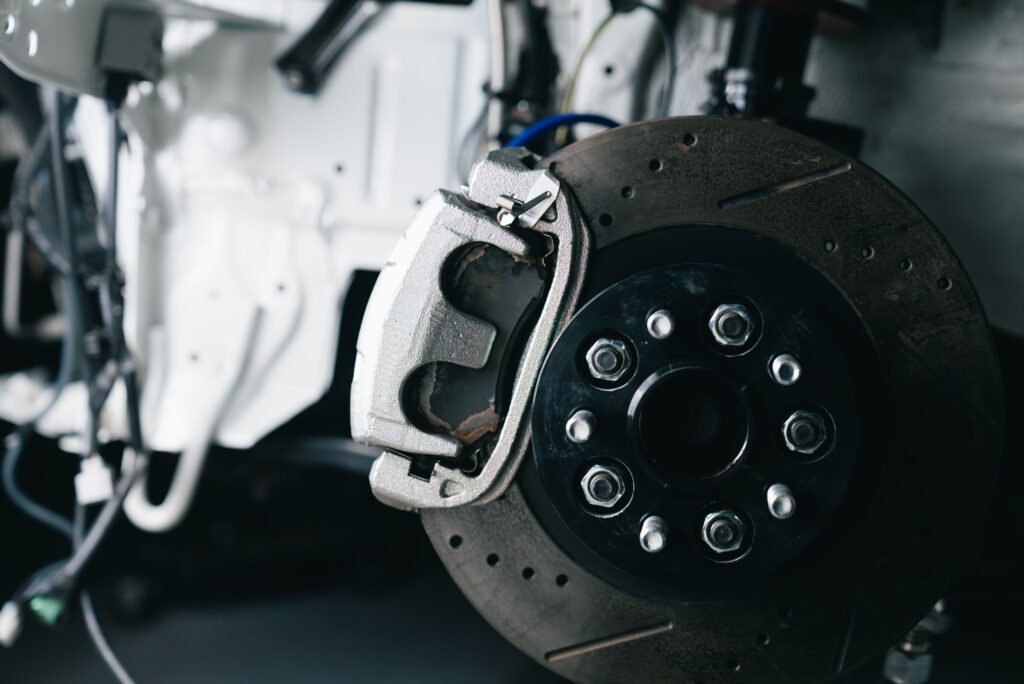
- What’s happening: Your brake pads are completely gone. You are now pressing bare metal calipers directly onto the metal brake rotors.
- The Verdict: Stop driving the car. Your stopping power is severely compromised, and you are actively destroying your braking system. Get it towed or serviced immediately.
4. A Deep Thumping or Clunking
If you hear a heavy “thunk” when weight shifts forward during a sudden stop, the issue might not be the brakes at all.
- What’s happening: Emergency braking puts massive stress on your vehicle’s suspension. A clunk usually indicates worn-out suspension bushings, loose calipers, or failing control arms.
- The Verdict: Have a mechanic inspect your front suspension and brake hardware assembly.