Why does my car overheat even though coolant is full?
Many drivers assume that if the coolant reservoir is full, the cooling system must be working properly. However, an engine can still overheat even when there appears to be plenty of coolant in the system.
The reason is simple: cooling an engine depends on more than just coolant quantity. The coolant must circulate correctly, transfer heat efficiently, and flow through a fully functioning cooling system. If any component fails, engine temperatures can rise quickly despite a full coolant tank.
Understanding the possible causes can help prevent severe engine damage and costly repairs.
How the Cooling System Actually Works
The cooling system does more than store coolant.
To keep the engine at a safe operating temperature, it relies on:
- Coolant circulation
- A functioning water pump
- An opening and closing thermostat
- A clean radiator
- Proper airflow
- Pressure within the cooling system
If any of these elements fail, overheating can occur even when coolant levels appear normal.
A Stuck Thermostat
The thermostat controls coolant flow between the engine and radiator.
When the engine is cold, the thermostat stays closed. Once the engine reaches operating temperature, it opens and allows coolant to circulate.
If the thermostat becomes stuck closed, coolant cannot flow properly.
Common Symptoms
- Temperature gauge rises rapidly
- Upper radiator hose remains cool
- Overheating shortly after startup
Why It Causes Overheating
The coolant remains trapped inside the engine and cannot release heat through the radiator.
Water Pump Failure
The water pump is responsible for moving coolant throughout the engine and radiator.
Even with a full coolant reservoir, a failing water pump can prevent proper circulation.
Common Symptoms
- Overheating at all speeds
- Coolant leaks near the pump
- Grinding or whining noises
- Rising temperature under load
Why It Causes Overheating
Without circulation, coolant cannot carry heat away from the engine.
Air Trapped in the Cooling System
Air pockets can develop after coolant replacement, cooling system repairs, or coolant leaks.
Common Symptoms
- Temperature fluctuations
- Inconsistent heater performance
- Sudden overheating
- Gurgling sounds from the cooling system
Why It Causes Overheating
Air prevents coolant from flowing properly through critical passages.
Radiator Blockage
Over time, rust, debris, or internal deposits can restrict coolant flow through the radiator.
Common Symptoms
- Engine runs hot during driving
- Cool spots on the radiator
- Poor cooling efficiency
Why It Causes Overheating
The radiator cannot transfer enough heat from the coolant to the outside air.
Cooling Fan Problems
Many vehicles rely on electric cooling fans, especially during low-speed driving and traffic conditions.
Common Symptoms
- Overheating in traffic
- Normal temperature at highway speeds
- Fan not turning on
Why It Causes Overheating
Without airflow through the radiator, heat cannot escape effectively.
Faulty Radiator Cap
The radiator cap helps maintain pressure within the cooling system.
Pressure raises the boiling point of coolant and improves cooling performance.
Common Symptoms
- Coolant overflow
- Rising temperatures
- Coolant loss without visible leaks
Why It Causes Overheating
Insufficient pressure allows coolant to boil at lower temperatures.
Collapsed Radiator Hose
Some radiator hoses can weaken internally and collapse under suction.
Common Symptoms
- Overheating at higher RPM
- Restricted coolant flow
- Soft or damaged hoses
Why It Causes Overheating
A collapsed hose limits circulation despite having adequate coolant.
Head Gasket Problems
A failing head gasket can cause overheating even when coolant appears full.
Common Symptoms
- Unexplained coolant loss
- White exhaust smoke
- Bubbles in the coolant reservoir
- Repeated overheating
Why It Causes Overheating
Combustion gases can disrupt coolant flow and create excessive pressure.
Why the Temperature Gauge May Rise Only Sometimes
Some cooling system faults are intermittent.
For example:
- A thermostat may stick only occasionally.
- A cooling fan may work sporadically.
- Air pockets may move through the system.
- A water pump may perform poorly under load.
These issues can make overheating appear unpredictable.
How to Diagnose the Problem
If coolant levels are full, inspect:
- Cooling fan operation
- Thermostat function
- Water pump condition
- Radiator airflow
- Radiator hose condition
- Cooling system pressure
- Signs of trapped air
A cooling system pressure test can reveal problems that are not immediately visible.
Can You Keep Driving an Overheating Car?
No.
Continuing to drive with an overheating engine can lead to:
- Head gasket failure
- Warped cylinder heads
- Engine damage
- Expensive repairs
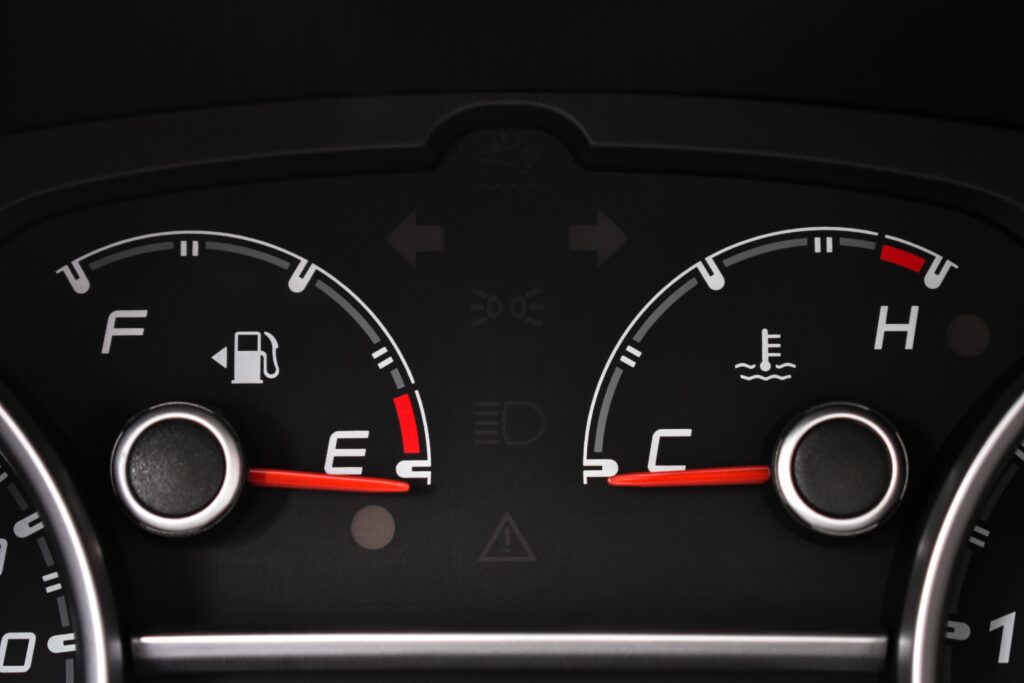
If the temperature gauge enters the red zone, stop driving as soon as it is safe to do so.
How to Prevent Cooling System Problems
- Replace coolant according to service intervals.
- Inspect radiator hoses regularly.
- Replace a weak radiator cap.
- Repair coolant leaks promptly.
- Service the thermostat when necessary.
- Ensure cooling fans operate correctly.
Regular maintenance significantly reduces the risk of overheating.
FAQ
Why is my car overheating if the coolant reservoir is full?
A full reservoir does not guarantee proper coolant circulation. Problems with the thermostat, water pump, radiator, or cooling fan can still cause overheating.
Can a bad thermostat cause overheating even with full coolant?
Yes. A thermostat stuck closed can prevent coolant from reaching the radiator.
Why does my car overheat only when sitting in traffic?
This often points to a cooling fan problem or insufficient airflow through the radiator.
Can air in the cooling system cause overheating?
Yes. Air pockets can block coolant flow and create hot spots inside the engine.
Will a bad water pump cause overheating?
Absolutely. Without proper coolant circulation, engine temperatures can rise quickly.
Is it safe to drive a car that overheats occasionally?
No. Even occasional overheating can damage the engine over time and should be investigated immediately.
Conclusion
If your car overheats even though the coolant is full, the problem is usually related to coolant circulation, heat transfer, or cooling system pressure rather than coolant level itself.
Components such as the thermostat, water pump, cooling fan, radiator, and radiator cap all play critical roles in controlling engine temperature. Identifying the root cause early can prevent severe engine damage and keep your vehicle operating safely and efficiently.