Why won’t my car start with fully charged battery?
It is incredibly frustrating to turn your key or push your start button, confident that your battery is at 100%, only to be met with silence or a failure to crank. When you have confirmed that the battery is fully charged, the issue shifts from a “lack of power” to a “breakdown in the delivery or conversion of that power.”
Here is a breakdown of why your vehicle may refuse to start despite having a healthy energy source.
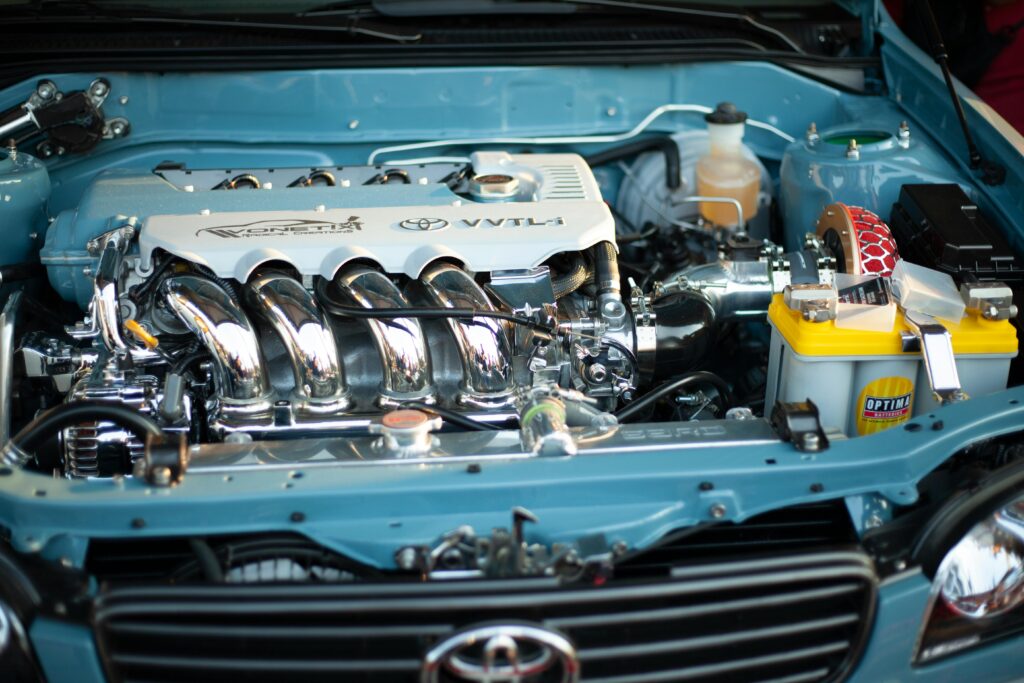
1. Corroded or Loose Battery Terminals
Even if a battery is fully charged, the electricity must travel through the terminals to reach the starter motor.
- The Issue: Oxidation (the white/blue powder) or loose cable clamps create high electrical resistance. This acts like a bottleneck, allowing enough power for small items like dome lights or the radio, but preventing the high amperage required for the starter motor to engage.
- The Fix: Inspect the battery terminals. If they are loose, tighten them securely. If they are corroded, clean them with a mixture of baking soda and water or a wire brush.
2. Failing Starter Motor
The starter motor is an electric motor that draws massive amounts of current to physically spin your engine.
- The Issue: Starter motors have a limited lifespan. Even with full voltage, a worn-out starter or a damaged solenoid (the switch on the starter) may fail to actuate.
- The Symptom: You may hear a single, sharp “click” or “clunk” when you turn the key, but the engine does not turn over. This is a tell-tale sign that the electrical signal is reaching the starter, but the motor itself is seized or mechanically faulty.
3. Faulty Starter Relay or Fuse
Your car’s electrical system uses a relay to act as a bridge between the ignition switch and the starter.
- The Issue: A relay is a small electromagnetic switch. If the internal contacts of the starter relay have burnt out or failed, it cannot complete the circuit to the starter, no matter how much charge the battery has.
- The Fix: Check your vehicle’s fuse box diagram. Swap the starter relay with a similar one (like the horn relay) to see if the vehicle starts. If it does, you have found the faulty component.
4. Immobilizer or Security System Issues
Modern vehicles are equipped with anti-theft systems that disable the ignition if they do not detect the correct signal from your key fob.
- The Issue: If the car’s computer (ECU) does not “handshake” with the transponder chip inside your key, it will intentionally cut off the starter motor to prevent theft.
- The Symptom: You might see a blinking security light or a “key” icon on your dashboard while trying to start the car.
5. Bad Ground Connection (Chassis Ground)
Electricity requires a complete circuit. Power travels from the battery to the starter, but it must return to the battery via the engine block and the vehicle frame.
- The Issue: If the heavy-duty “ground strap” connecting the engine block to the car’s chassis is broken, frayed, or corroded, the circuit is incomplete. The electricity has nowhere to go, rendering the system dead despite a full battery.
Frequently Asked Questions (FAQ)
Q: If the lights turn on, does that mean the battery is definitely good? A: Not necessarily. Lights require very little power (a few amps), whereas a starter motor requires hundreds of amps. A battery can have enough power to light up your dashboard but still lack the “Cold Cranking Amps” (CCA) to turn the engine.
Q: Can I “jump-start” a car that has a fully charged battery? A: Sometimes, yes. If the issue is a slightly weak connection, the extra voltage from a donor car can sometimes bridge the gap. If it starts after being jumped, the issue is likely your battery cables or a parasitic draw that is draining your battery faster than the alternator can fill it.
Q: How do I know if the starter is the problem? A: Listen closely while someone else turns the key. If you hear a single “click” from the engine bay but no spinning sound, the starter is likely receiving power but failing to function. If you hear nothing at all, it is more likely a fuse, relay, or ignition switch.
Q: What is the first thing I should check? A: Always start with the simplest physical connection: check that your battery terminals are tight and free of corrosion. This is the most common cause of “no start” scenarios with a healthy battery.